Stormwater for Homeowners
What Can You Do?
There are many simple things you can do to protect local streams, improve water quality, and help prevent flooding in our community.
When rain falls, stormwater runoff flows over land and impervious surfaces like roads, driveways, parking lots, and sidewalks. As it moves, it picks up debris, oil, grease, chemicals, fertilizers, pet waste, and sediment. This polluted runoff often flows directly into storm drains, ditches, streams, and rivers—without being treated.
The good news? Small changes at home can make a big difference.
Most stormwater is not treated before it reaches our waterways, but homeowners play a powerful role in protecting water quality. Programs and resources from Montgomery Soil and Water Conservation District can help reduce runoff from your property—and many solutions are easy, affordable, and effective.
Simple Actions You Can Take at Home
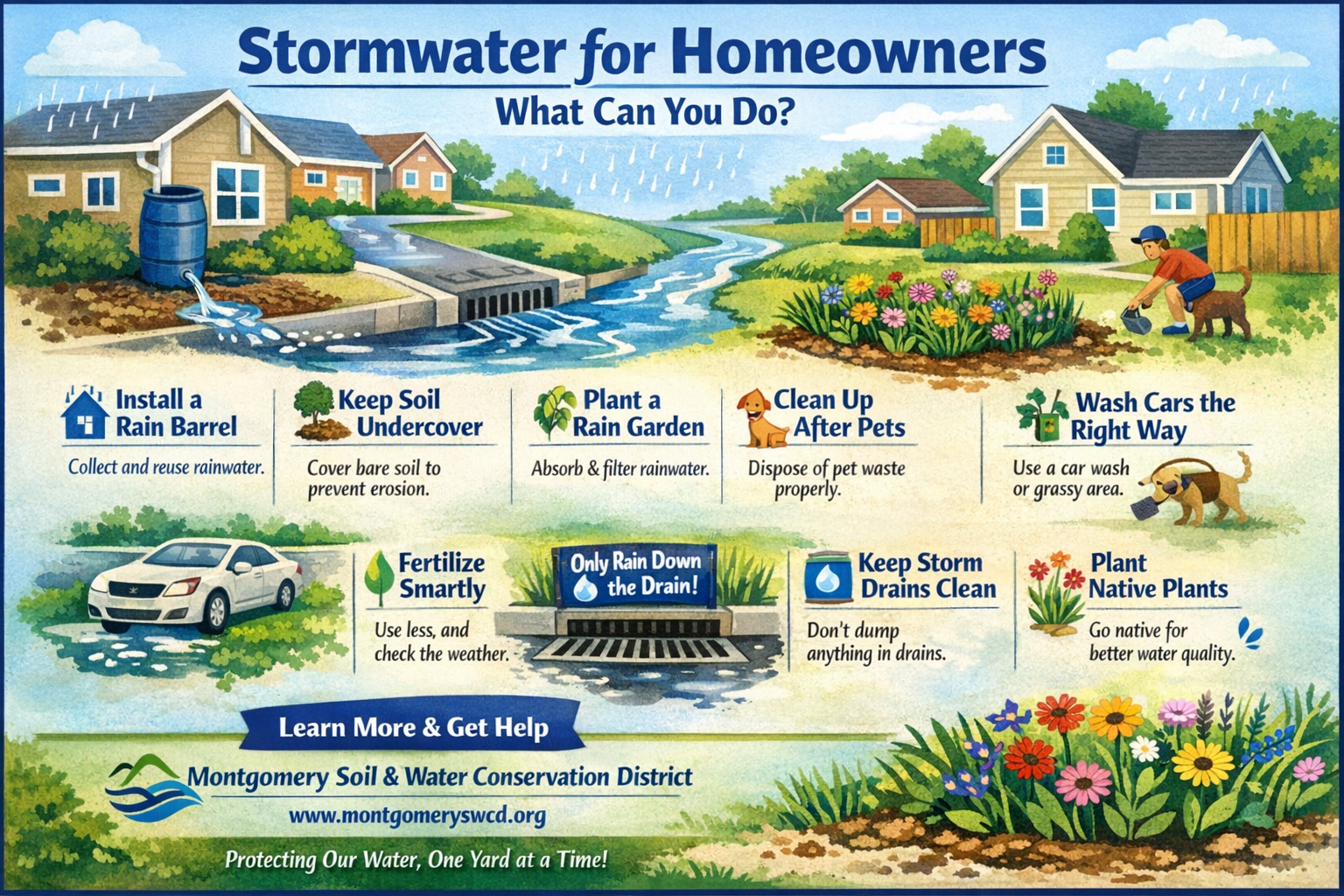
🌧 Install a Rain Barrel
Rain barrels collect water from your roof that would otherwise flow into storm drains. You can reuse this water later to
water lawns, gardens, or landscaping, reducing runoff and saving on water bills.
Rain barrels are available through programs offered by
Montgomery Soil and Water Conservation District.
🌱 Keep Soil “Undercover”
Bare soil washes away easily during rainstorms. Protect exposed areas by adding mulch, ground cover, or plants. Keeping soil in place:
- Reduces erosion
- Improves water quality
- Creates healthier lawns and gardens
🌼 Install a Rain Garden
Rain gardens are shallow, landscaped areas designed to temporarily hold rainwater and allow it to soak into the ground slowly instead of running off. They use native plants that tolerate wet conditions and add beauty to your yard.
Helpful resources to get started include guidance from OSU Extension and the Rain Garden Manual developed by Geauga Soil and Water Conservation District.
🐕 Clean Up After Pets
Pet waste contains bacteria and nutrients that wash into waterways during rain. Always pick up after your pets and dispose of waste properly. What seems small adds up quickly and can lead to unhealthy water conditions.
🚗 Wash Cars the Right Way
Wash your car at a commercial car wash or on your lawn where water can soak into the soil. Grass helps filter soaps, oils, and grime before they reach waterways—unlike paved driveways and streets.
🌿 Fertilize Only When Necessary
Excess fertilizer doesn’t just stay on your lawn—it washes into streams and rivers, causing algae blooms and harming fish.
- Apply fertilizer only if needed
- Check the weather and avoid fertilizing before rain
- Remember: our rivers don’t need fertilizer
🚫 Keep Storm Drains Clean
Only rain belongs in storm drains. Storm drains do not lead to treatment plants—anything poured or swept into them flows straight to our waterways. Never dump leaves, chemicals, paint, oil, or trash into storm drains.
🌾 Plant Native Plants
Native plants are great for birds, butterflies, and pollinators, and they’re also excellent for water quality. Once established, they:
- Require less watering
- Need little to no fertilizer
- Help absorb rainwater and reduce runoff
Native landscaping supports both healthy ecosystems and healthy waterways.
Small Steps. Big Impact.
By making thoughtful choices at home, you help protect local streams, reduce flooding risks, and keep our community’s water clean for future generations. Every yard matters—and every action counts.
Learn More & Get Help
For programs, workshops, rain barrels, native plant guidance, and hands-on resources to improve stormwater management on your property, visit the Montgomery Soil and Water Conservation District: 👉 https://www.montgomeryswcd.org/
They offer homeowner-friendly tools and local expertise to help reduce runoff, protect streams, and improve water quality across our region.
Reporting Illegal Dumping & Water Quality Concerns
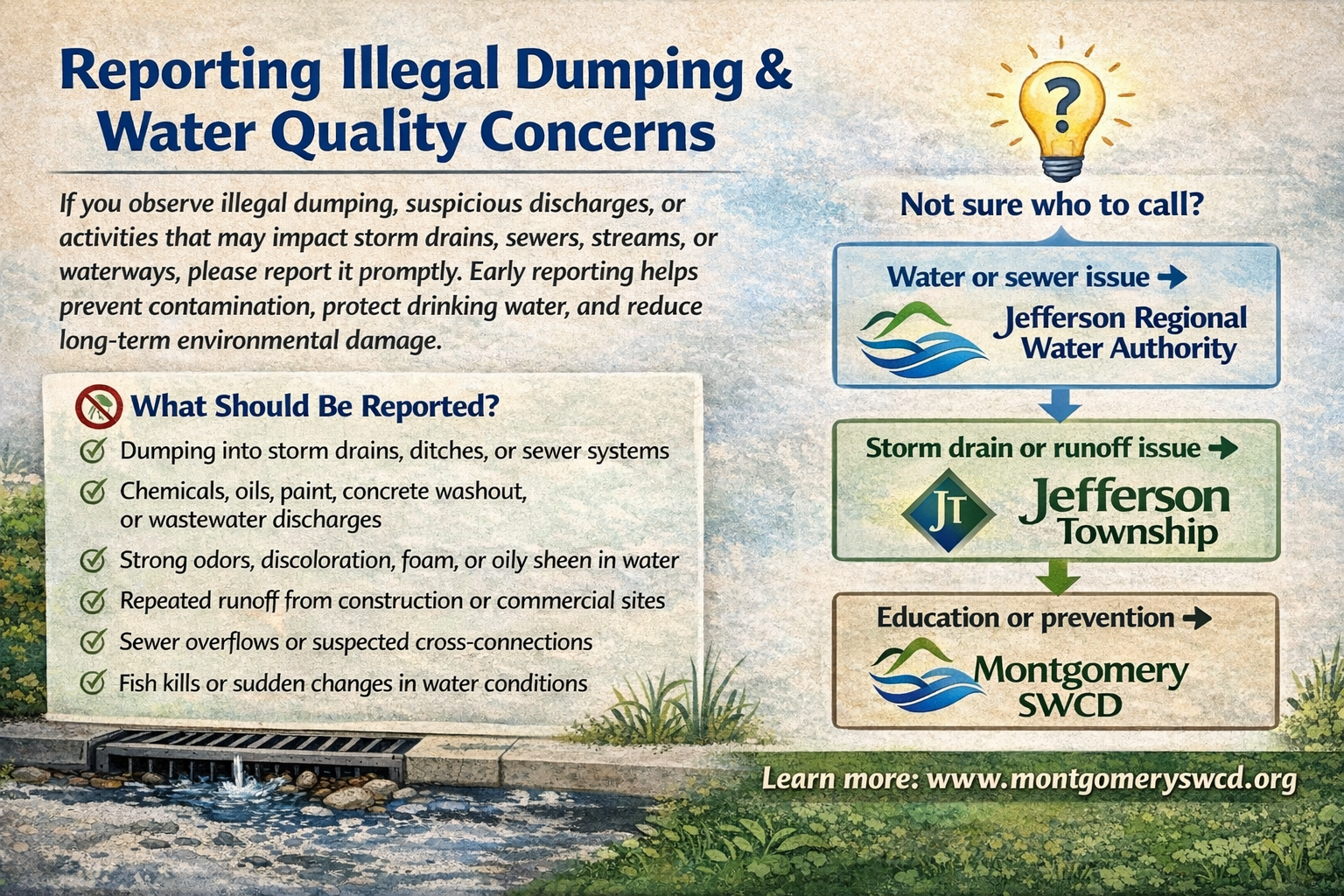
If you observe illegal dumping, suspicious discharges, or activities that may impact storm drains, sewers, streams, or waterways, please report it promptly. Early reporting helps prevent contamination, protect drinking water, and reduce long-term environmental damage.
🚫 What Should Be Reported?
- Dumping into storm drains, ditches, or sewer systems
- Chemicals, oils, paint, concrete washout, or wastewater discharges
- Strong odors, discoloration, foam, or oily sheen in water
- Repeated runoff from construction or commercial sites
- Sewer overflows or suspected cross-connections
- Fish kills or sudden changes in water conditions
📞 Who to Contact
💧 Water & Sewer System Concerns
For issues involving
water quality, sewer systems, or suspected contamination of drinking water, contact:
Jefferson Regional Water Authority
They oversee water distribution and wastewater treatment and should be notified of:
- Illegal dumping into sewers
- Sewer backups or overflows
- Suspected water contamination
🏘 Local Stormwater & Enforcement Issues
For drainage issues, stormwater runoff concerns, or local enforcement matters, contact:
Jefferson Township
Township staff can investigate and coordinate enforcement or corrective action.
🌿 Technical Assistance & Education
Residents may also contact:
Montgomery Soil and Water Conservation District
They provide education, technical guidance, and assistance related to stormwater, erosion, and water quality protection.
🚨 Serious Environmental Violations
For major spills or environmental emergencies, reports can be made to:
Ohio Environmental Protection Agency
(24/7 spill and environmental complaint response)
Why This Matters
Storm drains do not lead to treatment plants. Anything dumped into them can flow directly into streams and rivers — and ultimately affect drinking water sources. Reporting concerns helps protect:
- Public health
- Drinking water supplies
- Local streams and wildlife
- Community infrastructure
“Not sure who to call?”
• Water or sewer issue → Jefferson Regional Water Authority
• Storm drain or runoff issue → Jefferson Township
• Education or prevention → Montgomery SWCD